Seasonal Eating Guide

A practical, month-by-month reference for what grows in Britain and how to make the most of it. Adapted to the British climate across England, Scotland and Wales.

Eating With the British Calendar

Seasonal eating in Britain isn't about restriction. It's about understanding the rhythm of what grows here and building your meals around it. British produce follows a clear pattern — asparagus in late spring, soft fruit in summer, root vegetables and brassicas through autumn and winter. Learning that pattern changes how you shop, cook and think about food.

Food that travels shorter distances is typically fresher. Produce grown in season requires less artificial intervention — less heating, less lighting, less out-of-season forcing. For many fruit and vegetables, the seasonal version simply tastes different from the imported equivalent. These aren't marketing claims — they're observable differences that become apparent once you start paying attention.
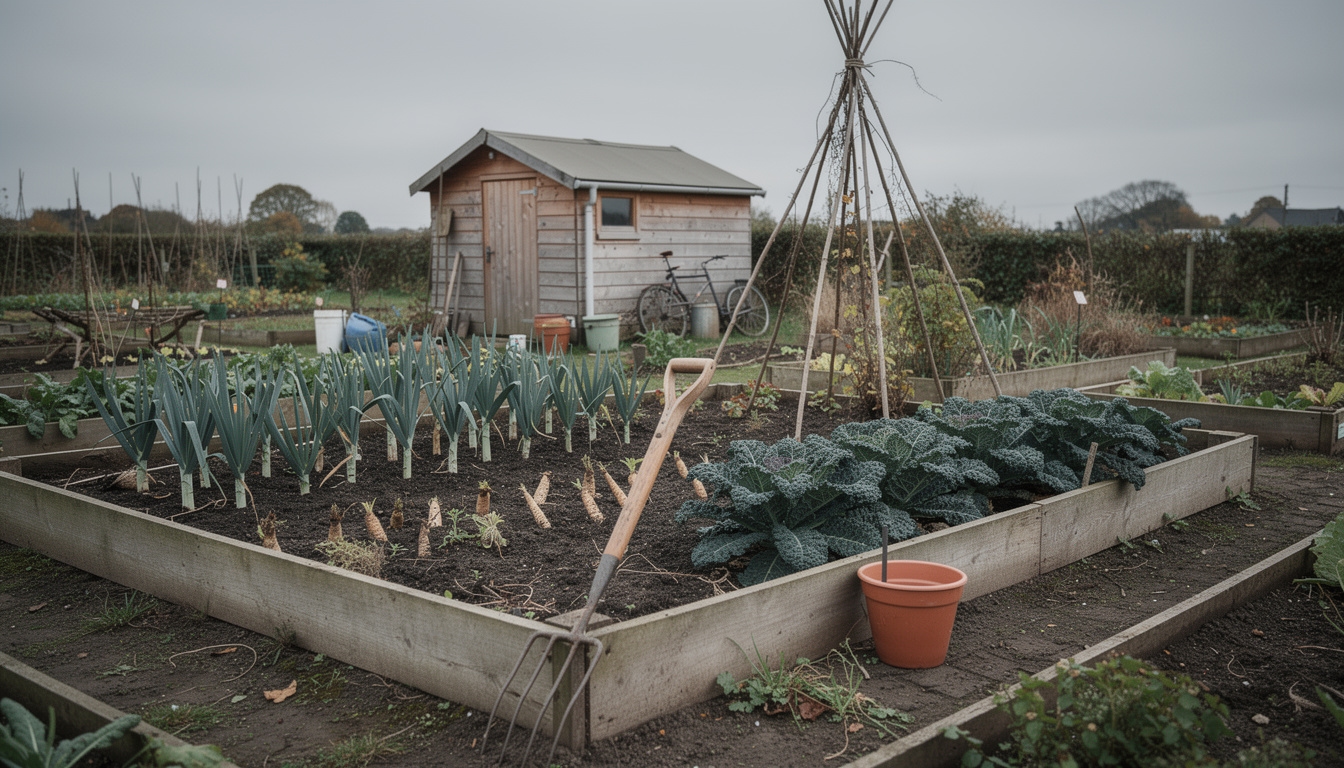
A well-tended British allotment in autumn with rows of leeks, kale and root vegetables ready for harvest, overcast British sky

The British Seasonal Calendar

Spring

March, April, May

Spring in Britain is a transition season. Early spring is still lean — roots from storage, overwintered brassicas. By May, the picture changes considerably.

  • Purple sprouting broccoli (March and April)
  • Spring greens and spinach
  • Asparagus (late April to June)
  • Radishes, spring onions
  • New potatoes (from May)
  • Rhubarb (forced, from January; outdoor from April)

Asparagus has a short UK season. It's one of the clearest examples of a vegetable that tastes noticeably different when local and in season.

Summer

June, July, August

British summer brings the widest variety of fresh produce. This is the time to eat well and preserve for later.

  • Strawberries, raspberries, currants, gooseberries
  • Courgettes, French beans, broad beans
  • Tomatoes (outdoor, from July)
  • Sweetcorn (August)
  • Lettuce, cucumber, peas
  • Cherries and early plums

Summer is the time to learn basic preservation — jam, freezing, fermentation. A glut of courgettes or soft fruit is an opportunity, not a problem.

Autumn

September, October, November

British autumn is arguably the richest season for produce variety. Root vegetables, squash, apples and brassicas come into their own.

  • Apples and pears (many UK varieties)
  • Squash, pumpkins, marrows
  • Root vegetables: carrots, parsnips, turnips, beetroot
  • Leeks, kale, cavolo nero
  • Wild mushrooms (foraged, with knowledge)
  • Elderberries, sloes, damsons

Autumn is the time to stock up on root vegetables for storage. Many keep well in a cool, dark space for weeks or months.

Winter

December, January, February

Winter eating in Britain rewards those who've planned ahead. But even without storage, there's a good range of fresh produce available.

  • Brussels sprouts, savoy cabbage, curly kale
  • Celeriac, swede, Jerusalem artichokes
  • Stored apples, pears and root vegetables
  • Forced rhubarb (from January)
  • Chicory and winter salads

British winter vegetables are underrated. Celeriac, swede and Jerusalem artichoke are versatile, nutritious and typically very affordable.

Building Seasonal Meals

Plan Around the Anchor Vegetable

Rather than planning a meal and then finding ingredients, start with what's in season and build around it. In October, a butternut squash or a bunch of leeks becomes the anchor from which a week of meals can grow. This approach reduces waste and makes shopping simpler.

Taught in: Seasonal Eating module, Path 05

Preserve the Glut

British summers produce more soft fruit and courgettes than most households can eat fresh. Learning basic preservation — jam, chutney, freezing, fermentation — extends the season and reduces food waste. None of these techniques require specialist equipment to begin.

Taught in: Preservation module, Path 05

Find Your Local Sources

Farmers markets, farm shops, veg box schemes and allotment networks exist across the UK. Finding the sources closest to you is a practical first step. Our guide covers how to locate these in your area and how to use them effectively alongside regular supermarket shopping.

Taught in: Local sourcing module, Path 05

Ready to eat with the seasons?

The full seasonal eating learning path is part of Latenelo's course catalogue. It covers meal planning, preservation, sourcing and the British seasonal calendar in depth.